 Beth
and Marvin's Miata Vacation 1998

Click on any of the thumbnail pictures below for a larger version of the image.
Established as a National Monument, May 2, 1924, Craters of the Moon covers over 83 square miles of territory. This desolate moonscape reveals the violent age of volcanos, where a variety of caves and craters are hidden among the mounds of black lava.
 By
the time we had arrived, the Visitor's Center was already closed, so we
just drove the 7 mile loop road through the park. The road takes
visitors past cinder
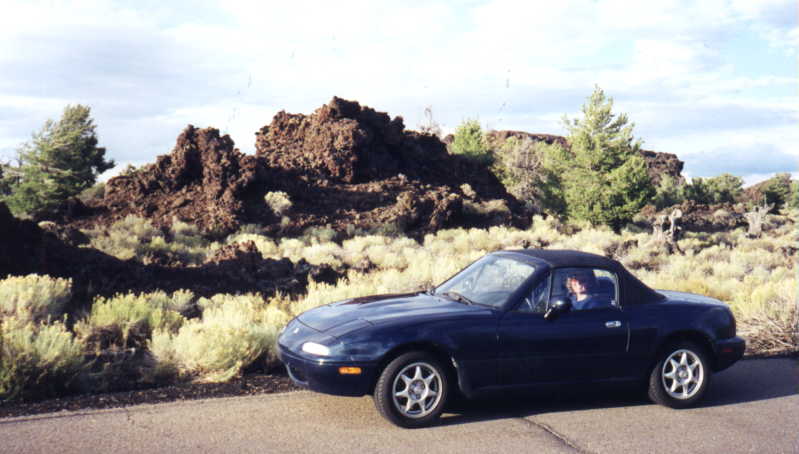
cones, lava flows, spatter cones, and lava tubes. This picture of
the Miata and the large pile of lava fragments was taken on the short
spur road through Devil's Orchard. Top's up on the Miata since it's a
cold and very windy late afternoon, causing us to make this visit to
the park a fairly brief one.
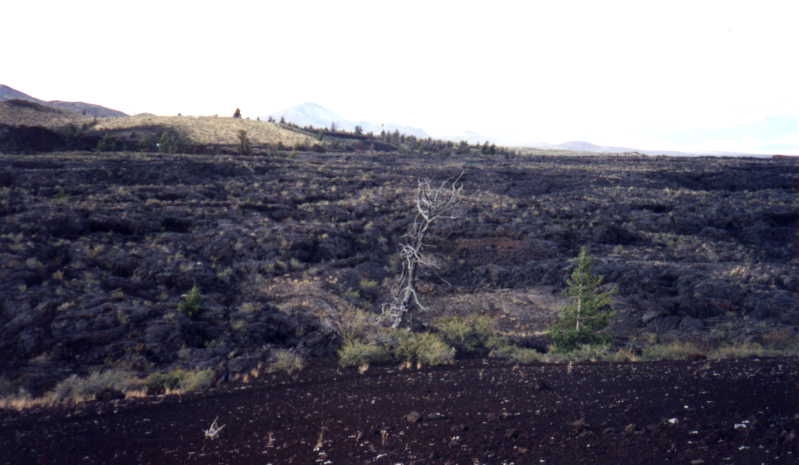
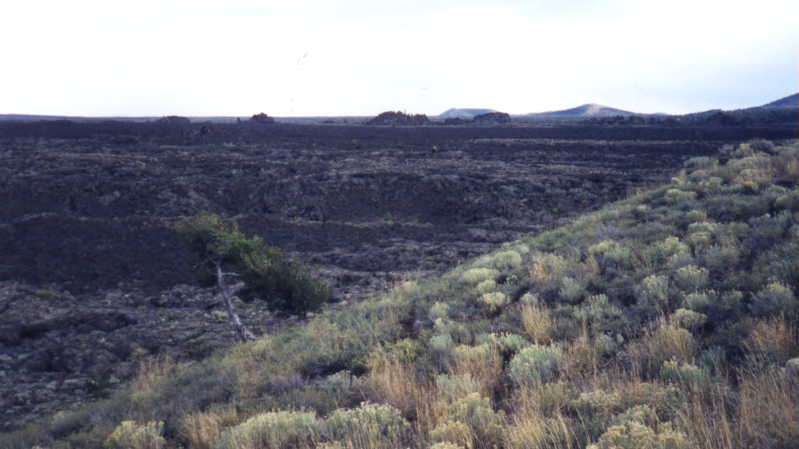 Volcanic
eruptions have occurred here as recently as 2,000 years ago. The lava
in the park is basaltic, which is characteristically dark in color,
contains 45 to 54 percent silica, and generally is rich in iron and
magnesium. The dark color of the lava combined with the absence of any
direct sunlight because of the cloud cover, caused most of the pictures
I took in the park to look flat and feature-less. I included these two
images on this page anyway, just to show the barren lava landscape and
to contrast the grassy hill in the foreground of the picture on the
right, with the lava field in the background.
The one thing I wish we would have a little more time to do in the park was to hike to the Cave Area of the park and explore the lava tubes. The tubes were formed when fluid, molten lava flowed out of the ground, and its surface cooled and hardened. This crust insulated the lava inside, enabling it to continue to flow. Eventually the molten lava inside flowed out, leaving the crust as the walls of a lava tube or cave.
Here is a link to an interesting NASA space radar image of the monument, plus a discussion of how such images give scientists clearer insights into those environmental changes which are caused by nature and those changes which are induced by human activity.
The final destination for our eighth day of the vacation was Twin Falls, Idaho, and when we arrived we found out that the temperature in the area was 20 degrees colder that day than the previous day. And the constant 25 to 30 mile an hour winds made it seem even colder than that. But we still planned to visit Shoshone Falls the following day, and hope the storm front would move through, bringing back the beautiful weather that had accompanied the first part of our trip.